How Technology Will Connect the World
Communication is one of the most important skills humans have ever developed. It allows us to share ideas, solve problems, teach new generations, and work together to accomplish goals that no one person could achieve alone. Every major civilization has relied on communication, from ancient cave paintings and handwritten letters to smartphones and video calls.
Throughout history, communication technology has constantly evolved. Thousands of years ago, people used smoke signals, drums, and messengers to send information over long distances. The invention of the printing press made books and newspapers available to millions of people. Later came the telegraph, telephone, radio, television, satellites, and eventually the Internet. Each breakthrough made it easier for people to exchange information more quickly and with more people than ever before.
Today, we can send a message around the world almost instantly. We can participate in online classes, hold video meetings, stream live events, and collaborate with people living thousands of miles away. But communication technology is still evolving, and the coming decades may bring even bigger changes.
Why Communication Technology Matters
Communication is much more than simply talking or sending text messages. It powers education, healthcare, business, science, entertainment, government, and emergency response. Nearly every modern technology depends on people and computers exchanging information quickly and accurately.
Scientists collaborate across continents to develop new medicines. Engineers work together to design spacecraft. Businesses coordinate with customers around the globe. Families stay connected regardless of where they live. Without advanced communication systems, many of the technologies we depend on every day would not exist.
As society becomes more connected, reliable communication networks will become even more important.
Artificial Intelligence Is Changing Communication
Artificial intelligence (AI) is already transforming the way people communicate. AI-powered assistants can answer questions, summarize information, translate languages, and help people write emails, reports, and computer programs.
One of the most exciting developments is real-time language translation. AI systems are becoming increasingly capable of translating spoken conversations almost instantly. In the future, two people who speak completely different languages may be able to carry on a natural conversation without needing a human interpreter.
AI is also improving accessibility. Speech recognition helps convert spoken words into text, while text-to-speech systems allow computers to read information aloud. These tools make communication easier for people with hearing or vision impairments and help create more inclusive technologies.
Virtual and Augmented Reality
Communication is becoming more immersive through virtual reality (VR) and augmented reality (AR). Instead of simply talking through a video call, people may soon meet inside realistic three-dimensional virtual environments where they can interact almost as if they were together in the same room.
Students could attend virtual science laboratories, history museums, or engineering workshops from anywhere in the world. Teachers could guide students through interactive lessons using three-dimensional models that everyone can examine together.
Augmented reality adds digital information to the real world. Smart glasses could display directions, subtitles, translations, or important information while allowing users to continue seeing their surroundings. As AR devices become smaller and more affordable, they may become a common way for people to communicate and access information throughout the day.
Faster Networks Connect More People
Every new generation of communication networks has allowed more information to travel faster.
Modern fiber-optic networks already transmit enormous amounts of data using pulses of light traveling through glass fibers. Wireless technologies such as Wi-Fi and 5G have made high-speed communication available almost everywhere.
Future 6G wireless networks are expected to offer even greater speeds, lower delays, and support for billions of connected devices. Although 6G is still under development, researchers believe it could make advanced applications such as holographic communication and remote robotic control much more practical.
Satellite Internet is also expanding global connectivity. Large constellations of satellites orbiting Earth are helping bring high-speed Internet access to rural communities, remote research stations, ships at sea, and areas affected by natural disasters. As more people gain reliable Internet access, education, healthcare, and business opportunities become available to communities that were previously difficult to reach.
The Internet of Things
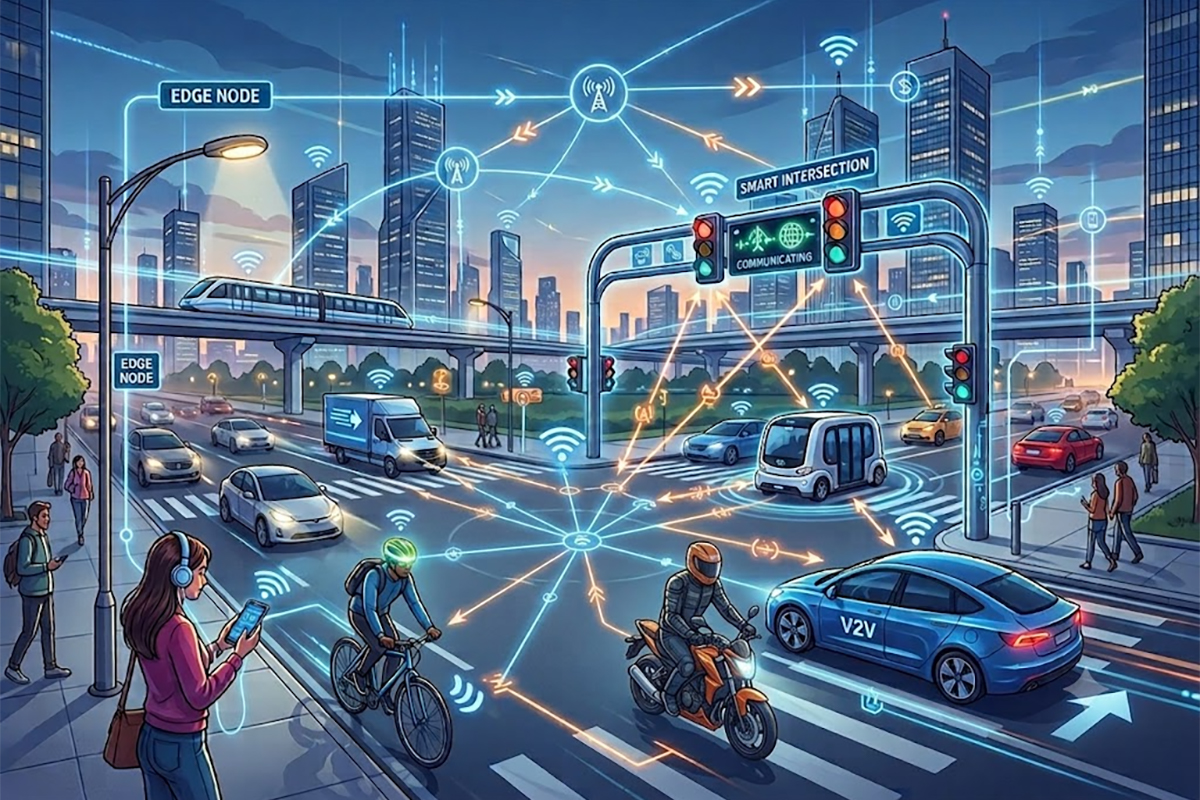
The Internet of Things (IoT) refers to everyday devices that can communicate with one another over the Internet. Smart thermostats, security cameras, wearable fitness trackers, home appliances, traffic systems, and industrial machines all use this technology.
In the future, billions of connected devices may automatically exchange information to improve efficiency and safety. Smart cities could monitor traffic, reduce energy consumption, detect water leaks, and improve emergency response. Farmers could use connected sensors to monitor soil conditions and weather, helping grow more food while using less water.
As IoT systems become more common, communication will increasingly occur not only between people but also between machines.
Blockchain and Secure Communication
As more personal and financial information is shared online, security becomes increasingly important.
Blockchain technology offers one possible way to improve secure communication by storing information in a distributed digital ledger rather than a single central database. Because every participant maintains a copy of the ledger, altering information without authorization becomes much more difficult.
Although blockchain is best known for supporting digital currencies, researchers are exploring its use for secure messaging, digital identity systems, supply chain management, and protecting important records against unauthorized changes.
Quantum Communication
Scientists are also developing quantum communication, one of the newest areas of communication research.
Quantum communication uses the unusual properties of quantum physics to help protect information from interception. One important technique, called quantum key distribution, allows encryption keys to be shared in ways that make eavesdropping easier to detect.
While quantum communication is still in its early stages and requires specialized equipment, it may eventually become an important tool for protecting highly sensitive communications used by governments, financial institutions, research organizations, and critical infrastructure.
Communication Beyond Earth
Communication technology will also play a major role in the future of space exploration.
As humans return to the Moon and prepare for future missions to Mars, engineers must develop communication systems that work reliably across enormous distances. Unlike communication on Earth, signals traveling between planets can take several minutes—or even longer—to arrive because radio waves travel at the speed of light.
Scientists are also researching laser communication systems that can transmit much larger amounts of data than traditional radio signals. These technologies may allow future astronauts to send high-resolution images, scientific data, and even video back to Earth more efficiently.
Challenges for the Future
While communication technology creates exciting opportunities, it also introduces important challenges.
Privacy remains a major concern as more personal information is shared online. Cybersecurity is becoming increasingly important because communication networks must protect sensitive data from hackers and cybercriminals. Artificial intelligence also raises questions about misinformation, deepfake videos, and determining whether online content is authentic.
Another challenge is ensuring that everyone benefits from new communication technologies. Millions of people around the world still have limited or no Internet access. Expanding affordable connectivity will help provide greater access to education, healthcare, employment, and scientific knowledge.
Learning how to communicate responsibly, evaluate online information critically, and protect personal privacy will become essential skills for future generations.
Careers in Communication Technology
The future of communication will require experts from many different fields. Computer scientists develop software and artificial intelligence systems. Electrical engineers design communication networks and satellites. Cybersecurity specialists protect digital information. Data scientists analyze communication patterns, while user experience designers create technology that is easier for everyone to use.
Many careers combine several areas of science and technology, making communication one of the fastest-growing fields for students interested in STEM subjects.
Looking Ahead
Communication has always evolved alongside human civilization, and its future promises to be even more remarkable. Artificial intelligence, virtual and augmented reality, faster wireless networks, satellite Internet, blockchain, quantum communication, and billions of connected smart devices are changing the way people share information.
These technologies have the potential to make education more accessible, healthcare more effective, businesses more efficient, and global collaboration easier than ever before. At the same time, society must address challenges involving privacy, cybersecurity, and equal access so that everyone can benefit from these advances.
The future of communication is not simply about sending messages more quickly. It is about creating new ways for people, computers, and intelligent machines to work together across the world—and eventually across space. As today’s high-school students become tomorrow’s scientists, engineers, entrepreneurs, and leaders, they will help shape how the next generation communicates, learns, and solves the challenges of the future.